Words You Wrote for No One: The Secret Life of Letters We Never Mailed

There's a specific kind of quiet that comes after you finish writing something you know you'll never send. You close the notebook. You hit save and then immediately minimize the window. You fold the paper in thirds, tuck it somewhere inconvenient, and walk away feeling — what exactly? Lighter, maybe. A little raw. Like you just told the truth to an empty room and the room actually listened.
Most of us have done this at least once. A letter to an ex you couldn't quite let go of. A message to a parent about the thing you've never been able to say out loud. A note addressed to yourself at seventeen, full of warnings and apologies. We write them, and then we don't send them, and somehow that feels like enough.
But why? What is it about the act of writing — the physical or digital labor of putting the words somewhere — that does the emotional work even when nobody else ever reads a single line?
The Draft That Lives Forever
Therapists have been quietly recommending this practice for decades. It goes by different names — expressive writing, unsent letter therapy, emotional drafting — but the mechanics are always the same: you write what you actually feel, without the social filter, without the performance of how you're supposed to feel, and then you don't send it.
The research behind it is surprisingly solid. Psychologist James Pennebaker spent years studying the effects of expressive writing on emotional and physical health, and his findings kept pointing in the same direction: writing about difficult experiences, even privately, reduced anxiety, improved mood, and helped people process trauma more effectively than simply thinking about it. The act of translating feeling into language seems to do something structural in the brain — it organizes the chaos, gives it edges, makes it something you can look at from a distance.
But there's a specific alchemy that happens when you write something for someone and then deliberately don't deliver it. That's a different animal entirely.
The Confession as an Object
When you write an unsent letter to a real person, you're doing something complicated. You're creating a version of a conversation that only exists on your terms. You get to say everything — the ugly, the contradictory, the things that would come out wrong if you actually had to say them while someone was watching your face. And because you're never going to send it, there's no consequence. No response to brace for. No relationship to manage.
What you're left with is something close to pure honesty. Which is, frankly, terrifying. And also kind of addictive.
History is full of people who wrote letters they never sent. Abraham Lincoln famously composed what he called "hot letters" — furious dispatches to generals and politicians that he'd write in the heat of frustration, then set aside without signing. He understood, apparently, that the writing served the purpose. The sending would only create new problems.
Freud wrote an unsent letter to a colleague that revealed more about his own anxieties than most of his published work. Kafka left behind notebooks full of confessions that he explicitly asked to be destroyed — which, famously, they weren't. Even in death, the unsent word has a way of surviving.
Your Drafts Folder Is a Time Capsule
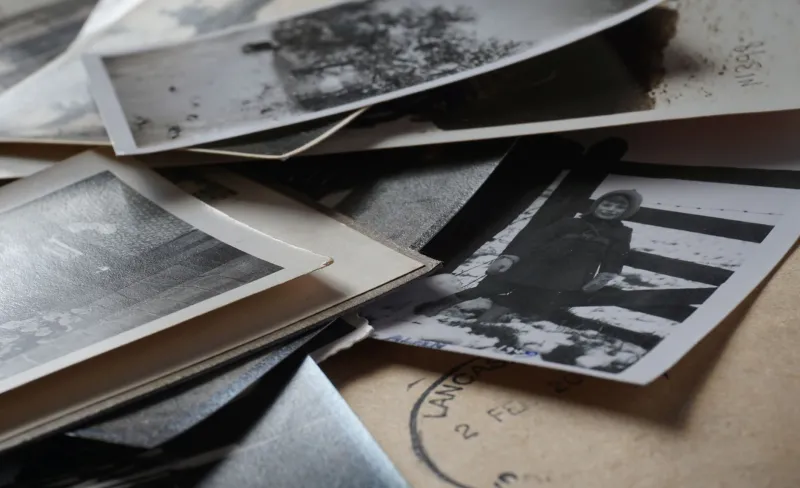
We live in an era where unsent letters have migrated into the cloud. Email drafts. Notes app entries. Voice memos recorded at 2 a.m. that you'll never actually listen to again. The format has changed, but the impulse is exactly the same as it was when people pressed pen to paper by candlelight and then buried the page at the bottom of a trunk.
There's something a little heartbreaking about that continuity. Generations of people, across centuries of wildly different circumstances, all doing the same quiet thing: writing the truth and then hiding it. Like the confession itself was the whole point, and the audience was always optional.
For a lot of people, that draft folder becomes a kind of emotional archive. You open it years later and find a version of yourself you'd almost forgotten — the one who was furious at someone who no longer matters, or desperately in love with someone you can barely picture now. The unsent letter becomes a document of who you were at a specific moment of intensity, preserved in amber because you never hit send and let the conversation move on.
Why We Don't Send Them
This is the part that gets interesting. Because it's not always fear that stops us. Sometimes it's something closer to wisdom.
Sending a deeply honest letter to someone changes things. It creates an obligation for them to respond. It shifts the power in a relationship. It makes your inner world their problem, at least temporarily. And sometimes — often — what you wrote in that letter wasn't really for them anyway. It was for you. Sending it would almost dilute the thing, pull it out of your private reality and into the messy social world where it would get misread, or dismissed, or turned into an argument.
There's also the matter of what happens to the letter once it leaves your hands. You lose control of it. It can be screenshotted. It can be shared. It can be read back to you in a courtroom or at a family dinner or by someone who was never supposed to know you felt that way. Keeping it unsent keeps it yours.
And maybe that's the point. In a world where so much of what we say and share is immediately public, immediately archived, immediately subject to other people's interpretations — the unsent letter is one of the last truly private things we have. It's the version of yourself that doesn't have to perform for anyone.
What We're Really Doing When We Write to No One
There's a word therapists sometimes use: witnessing. The idea that part of what we need when we're struggling isn't necessarily advice or response, but simply to be witnessed — to have our experience acknowledged as real. Writing, it turns out, can do that for yourself. You become your own witness. You put the feeling into language, and in doing so, you validate it. You tell yourself: this happened, this mattered, this was real.
The letter you never send is a form of self-witnessing. And there's something quietly radical about that. About saying: I don't need you to hear this for it to be true. I know what I felt. I wrote it down. That's enough.
Maybe more of us should try it. Not as a replacement for actual communication — some things genuinely need to be said out loud, to a real person who can respond — but as a practice. A way of checking in with the version of yourself that doesn't get to talk very often. The one with opinions and grief and love and anger that doesn't fit neatly into a text message or a public post.
Write the letter. Don't send it. See what you find out.
There's a reason those drafts never get deleted. We know, somewhere, that they're keeping something alive — a version of the truth we're not ready to let go of yet. And sometimes, that's exactly what we need.