Buried in Plain Sight: The Strange Power of Photographs We Were Never Supposed to Find
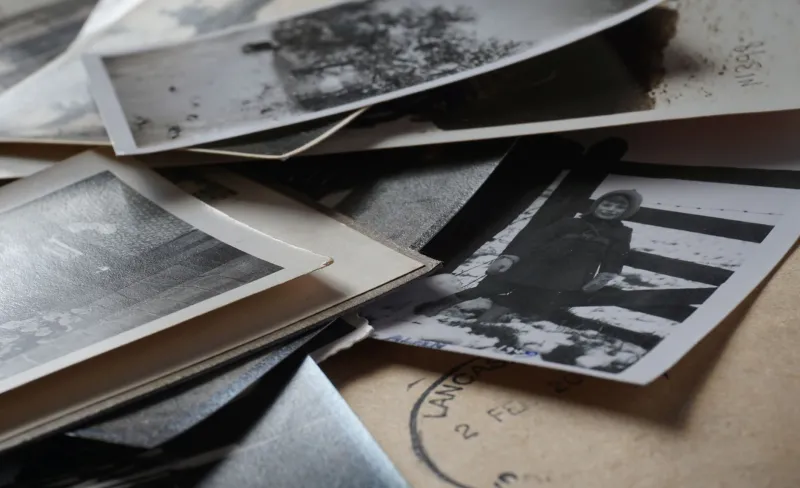
Somewhere in a house in rural Ohio, a woman renovating her grandmother's kitchen pulled back a loose piece of baseboard trim and found a stack of Polaroids held together with a rubber band so old it crumbled on contact. The photos were of a man she didn't recognize. Her grandmother, who died in 2019, never mentioned him. Nobody in the family could identify him. And yet there he was — preserved in that square, slightly faded format that only Polaroid ever got right — smiling at someone off-camera like the whole world was about to open up for him.
That story lives rent-free in my head, and I think it will for a while.
Because here's the thing: a digital photo doesn't do that. A JPEG buried in a folder on a dead laptop doesn't have the same gravity. It doesn't smell like anything. It doesn't yellow at the edges. It doesn't make your hands shake a little when you hold it. There's something about analog proof — something about the physicality of it — that turns a simple image into a relic.
Why We Still Reach for the Real Thing
We are, by almost every measurable standard, a digital species now. Americans take roughly 1.4 trillion photos per year, the overwhelming majority of which live entirely on phones and in cloud storage. We have essentially infinite capacity to document our lives. And yet the analog photography market has been quietly growing for years. Film camera sales ticked upward through the 2010s. Instant film is a legitimate business again. People are paying real money to develop rolls of 35mm in an era when they could just... not.
The psychology behind this isn't complicated once you sit with it. Digital images are abundant, which means they're cheap — not in cost, but in emotional weight. When you can take 47 nearly identical photos of your kid blowing out birthday candles and delete 46 of them without consequence, none of those images carry much risk. They're disposable by design.
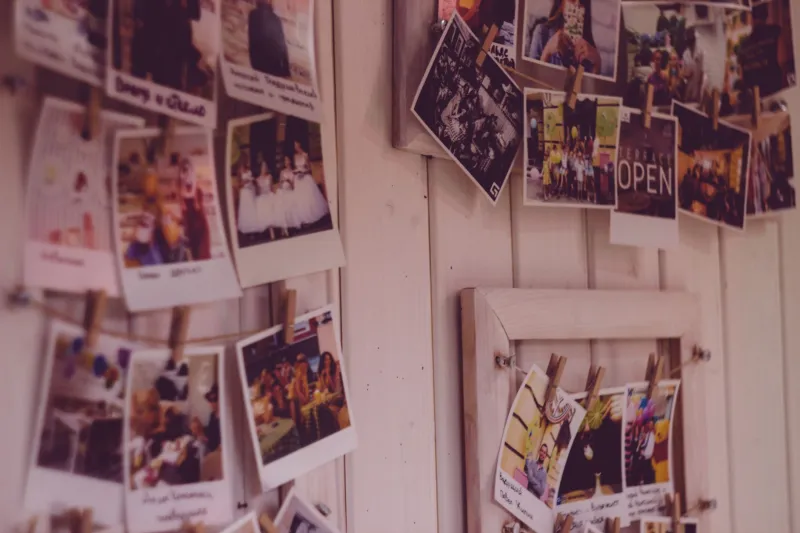
A Polaroid, though? That's a one-shot deal. The camera spits it out, the image slowly blooms into existence right there in your hand, and whatever it captures is what you've got. That scarcity makes it feel chosen. Intentional. True in a way that a filtered Instagram post just isn't.
And when something feels true, we treat it differently. We hide it.
The Psychology of the Hidden Photograph
Hiding a photograph is a strange act when you think about it. You're not destroying the memory. You're not sharing it. You're doing something more complicated — you're putting it somewhere safe that also happens to be somewhere secret, which is its own kind of contradiction.
Sometimes the hiding is protective. People stash photos of relationships their families would have disapproved of, or images from chapters of their lives they never fully explained to anyone. Sometimes it's grief — a photo of someone who died, too painful to display but too precious to throw away. Sometimes it might be guilt, or longing, or something that doesn't have a clean name.
What all of those motivations share is the belief that the photograph matters. You don't hide things that don't matter. You toss them, or you scroll past them, or you let them expire in a backup you never check. The act of concealment is, paradoxically, an act of preservation. You're saying: this is real, this happened, and I'm not ready to let the world decide what to do with it.
There's a whole genre of Reddit thread devoted to photos found in thrift store frames or tucked into secondhand books. People post them, try to identify the subjects, wonder aloud about the stories behind them. It's become its own kind of amateur detective work, which says a lot about how we respond to found analog images. We don't scroll past them. We lean in.
What Happens When Someone Else Finds It
That Ohio woman with the Polaroids had a decision to make. She could throw them away — the man was a stranger, her grandmother was gone, the story was closed. She could keep them, which meant carrying a mystery she'd probably never solve. Or she could share them, which is what she did, posting them to a family Facebook group and watching an argument unfold in the comments about whether her grandmother had a whole secret life nobody knew about.
The photos didn't answer anything. They just generated more questions, which is maybe the most honest thing a photograph can do.
This is the particular cruelty and beauty of hidden analog images: they outlast the context that would explain them. The person who hid them knew the whole story. Everyone who finds them afterward gets only the image — a fragment, a face, a moment that meant something enormous to someone who isn't around to say why.
Digital photos rarely survive that way. They're tied to accounts that get deactivated, to devices that die, to storage systems that require ongoing maintenance. A Polaroid under a floorboard, though? That thing can wait decades. It can wait longer than grief, longer than embarrassment, longer than whatever reason it was hidden in the first place.
Does Hiding Something Make It More Real?
I keep coming back to this question, because I think it's the heart of what makes found photographs so haunting.
There's an argument that hiding something diminishes it — that a memory locked away is a memory being denied, slowly suffocated by its own concealment. But I'm not sure I buy that. The photos that woman found in her grandmother's kitchen weren't diminished. They were charged. They carried more weight than any photo displayed in a frame on a mantel, because they'd been kept, deliberately, for reasons nobody else was supposed to know.
Hiding something is a form of honesty, in a weird way. It's an acknowledgment that this thing is real and significant enough to require safekeeping. It's the opposite of performative memory — the curated highlight reel, the photo that exists to be shown. A hidden photograph exists only for itself, and maybe for the person who hid it.
When someone else finds it later, they inherit that weight without the context. And there's something almost unbearably intimate about that exchange across time — a stranger's hands holding proof of a life they'll never fully understand.
The Photograph That Waits
We talk a lot about digital permanence — the idea that nothing online truly disappears, that everything we post lives forever in some server somewhere. But digital permanence is corporate and cold. It depends on companies staying solvent and policies not changing and formats not going obsolete.
Analog permanence is different. It's stubborn and physical and indifferent to infrastructure. A photograph hidden in a wall doesn't need a subscription to survive. It just needs to be left alone.
Maybe that's why we still hide them. Not because we're afraid of being found out, but because some part of us understands that paper and chemistry and a little bit of darkness is still the most reliable archive we've ever invented.
The cloud forgets. The floorboard remembers.