Delete, Burn, Forget: The Quiet Revolution of People Erasing Their Own Visual History
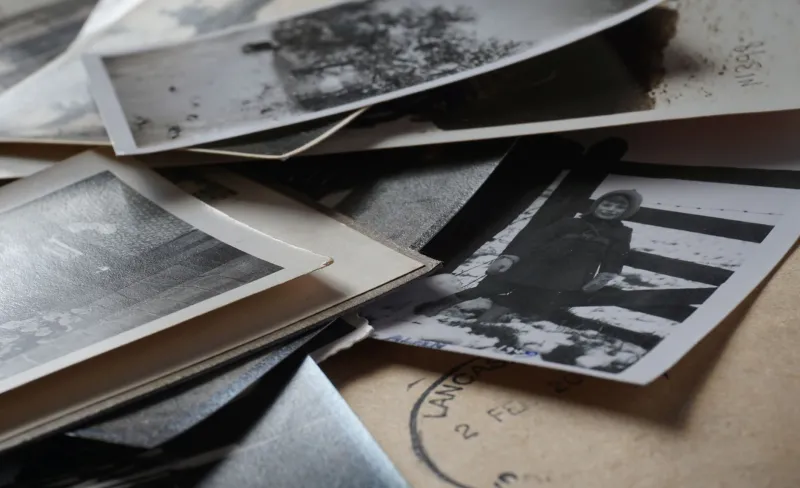
There's a particular kind of afternoon that a lot of people know but rarely talk about. You're scrolling through an old phone backup, or maybe you've just unearthed a shoebox from the back of a closet, and suddenly you're face to face with a version of yourself you didn't ask to meet again. The haircut. The ex. The apartment that smelled like bad decisions. And instead of laughing it off or saving it for some future nostalgia trip, you feel something closer to revulsion — followed almost immediately by the urge to make it disappear.
So you delete it. Or you burn it. Or you deactivate the whole account, wipe the hard drive, and pretend those years simply didn't render properly.
Welcome to what might be the strangest contradiction of the digital age: a generation that documents everything, quietly choosing to erase everything too.
The Camera Roll That Became a Crime Scene
We take more photos now than at any point in human history. Americans alone snap billions of images every single year — birthdays, sunsets, meals, mirrors, moments that seemed important at 11 p.m. on a Tuesday. The assumption baked into all of that documenting is that we want a record. That someday we'll be glad we saved it.
But therapists, digital archivists, and just regular people having a rough week will tell you something different is happening underneath all that clicking. For a lot of folks, the photo archive has stopped feeling like a treasure chest and started feeling more like evidence.
Evidence of who they were with. What they weighed. How happy they looked in a relationship that eventually fell apart. What their face looked like before something changed it.
Deleting those photos — really committing to the deletion, emptying the trash, not just moving them to a hidden album — feels less like loss and more like relief. Like finally getting to write your own ending.
Control Is the Whole Point
Here's the thing that doesn't get said enough: erasing your own visual history is, at its core, a power move.
Most of us spend our lives feeling like memory happens to us. You don't choose what sticks. You don't get to decide which moments replay at 3 a.m. or which old photos an algorithm decides to surface on your birthday. Your past has a way of showing up uninvited, wearing the face of someone you used to love or a version of yourself you've been trying to outgrow.
Deleting the photos — burning the prints, nuking the Instagram account — is one of the few moments where you actually get to say: not this time. You are actively curating what survives. You're not just telling your story; you're deciding which chapters anyone (including future you) will ever get to read.
There's a reason people describe it with words like cleansing or freeing. It's not really about the images. It's about reclaiming authorship.
The Paradox Hiding in Plain Sight
But here's where it gets genuinely strange, and kind of fascinating. The same people who are deliberately destroying their visual history are often still out there, right now, documenting every single day.
They'll delete every photo from a five-year relationship on a Sunday and post a carefully lit latte on Monday. They'll burn the prints from their twenties and still maintain a curated Instagram grid. They'll wipe a decade of Facebook memories and immediately start a BeReal account.
This isn't hypocrisy. It's something more interesting than that. It's the act of choosing which version of yourself gets to exist publicly — and which one gets quietly buried. The erasure and the documentation aren't in conflict. They're working together, like two hands shaping the same piece of clay.
What you delete is just as much a part of your self-portrait as what you keep.
Regret Has a Very Specific File Size
Not everyone who deletes old photos is processing trauma or staging some dramatic reinvention. Sometimes it's simpler and sadder than that. Sometimes it's just regret — the ordinary, everyday kind that doesn't make for a good story but takes up an enormous amount of space.
A bad haircut. A phase you'd rather not explain to a new partner. A friend group that dissolved under ugly circumstances. A body you don't feel at home in anymore, or a body you miss so much it hurts to look at.
Regret is heavy, and photos make it visible. They give it a timestamp. They make the thing you wish hadn't happened undeniably, visually real. So it tracks that people would want to delete them — not to pretend the moment never happened, exactly, but to stop having to see it every time they reach for their phone.
The problem is that memory doesn't work like a camera roll. You can empty the trash folder, but your brain doesn't have one. The images you were most desperate to delete are often the ones that stick around the longest, playing on loop in the back of your head long after the file is gone.
What Gets Lost When We Choose What Survives
There's a version of this conversation that goes dark pretty fast. Historians and archivists have been sounding quiet alarms about the fact that digital memories are disappearing at a rate we've never seen before — not just through deliberate deletion, but through dead platforms, expired storage plans, and devices no one ever backed up. The personal visual record of entire decades is evaporating.
But the deliberate erasure adds another layer. When people choose to destroy their own archives, they're not just tidying up. They're making editorial decisions about what the historical record of their life will look like. Future family members won't find those photos. Future versions of themselves won't be able to look back.
That might feel like freedom right now. Twenty years from now, it might feel like something else entirely.
There's a reason we've always been drawn to the photos that survived — the crumpled one in a wallet, the one that made it through a house fire, the faded print someone kept even when they probably should have let it go. The survival of an image feels like it means something. Like that moment mattered enough to endure.
When we delete our own history, we're also deleting that possibility. The photo that might have mattered, someday, to someone — maybe even to us — never gets the chance to prove it.
The Story You're Telling by What You Leave Behind
At the end of the day, this whole strange phenomenon — the deleting, the burning, the deliberate curating of our own disappearance — is really just another form of storytelling. It's us deciding, consciously or not, what narrative we want to survive us.
And that's very human. People have always done this. Letters got thrown in fireplaces. Diaries got buried or destroyed. Portraits got taken down from walls. The technology is new; the impulse is ancient.
What's different now is the scale, and the speed, and the weird intimacy of doing it alone at midnight with your thumb hovering over a delete button, deciding in real time which version of yourself gets to live on.
Some of those decisions are going to feel like the right call forever. Some of them are going to hurt later in ways that are hard to anticipate from where you're standing right now.
But maybe that's the point. Maybe the whole paradox — document everything, erase everything — is just us trying to hold on and let go at the same time. Which, honestly, is the most human thing there is.