Press 1 to Replay: The People We Keep Alive in Our Voicemail Inbox
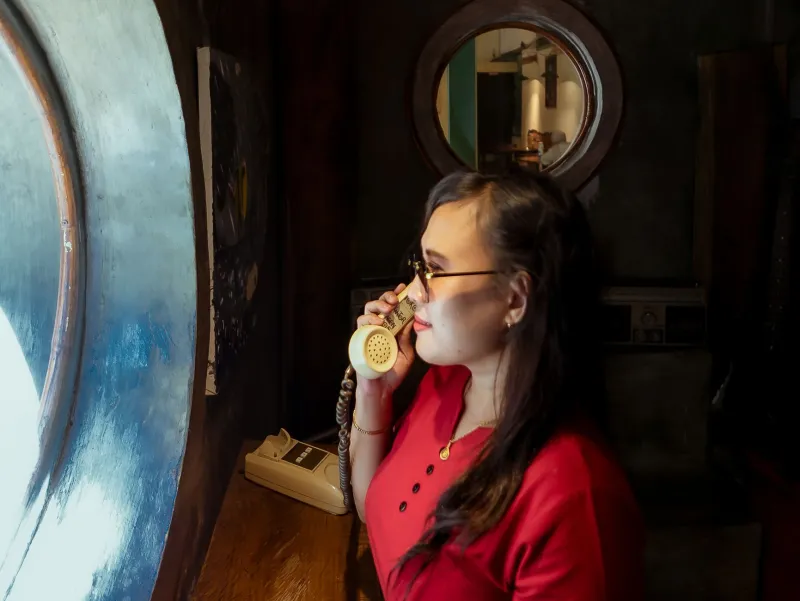
There's a voicemail on my friend Dana's phone that's been sitting there for four years. It's her grandmother, calling to remind her about Sunday dinner. Forty-three seconds of background kitchen noise, a slightly wrong pronunciation of Dana's name, and a sign-off that ends mid-sentence because her grandmother never quite figured out how to properly hang up a call. Dana has listened to it maybe a hundred times. She has never once considered deleting it.
She's not alone. Not even close.
In an era where we compulsively clear our notifications, archive our inboxes, and stress-delete apps we haven't opened in a week, millions of Americans are quietly, deliberately holding onto something that the rest of their digital hygiene routine would normally sweep away without a second thought: the last recorded voice of someone they've lost.
The Inbox Nobody Talks About
We don't really have a name for it yet, which is part of what makes it so strange. Grief counselors sometimes call these recordings "continuing bonds" — objects or rituals that let the bereaved maintain a symbolic connection to the deceased. Anthropologists might frame them as relics. But most people who keep these voicemails don't think in academic terms. They just know they can't press delete.
And it's not only voicemails. Text threads go untouched for years. Voice notes in WhatsApp or iMessage sit in conversations that will never see a reply. Some people screenshot the last text exchange and keep it in a hidden photo album. Others export entire message histories and save them to hard drives, not because they plan to read them again, but because the idea of those words disappearing entirely feels like losing the person twice.
What we're really talking about is a new kind of archive — one that didn't exist twenty years ago — built entirely out of the casual, throwaway digital noise of everyday life that has suddenly become irreplaceable.
Why the Voice Hits Different
There's something about audio that photographs and even video can't quite replicate. A photo freezes a moment. A video shows you a version of someone performing for the camera. But a voicemail? That's just them, mid-thought, in the middle of a Tuesday, talking the way they actually talked. The weird pause before they said your name. The way they cleared their throat. The specific rhythm of how they said goodbye.
Neuroscience backs this up to some degree. The human brain processes voices with remarkable intimacy — we recognize the people we love by their vocal patterns before we can even consciously register what they're saying. Hearing a familiar voice activates emotional memory in ways that are almost visceral. It's not nostalgia exactly. It's closer to presence.
For a lot of people, that's exactly the point. Pressing play doesn't feel like remembering someone. It feels, for forty-three seconds, like they're still here.
The Double-Edged Comfort
Here's where it gets complicated, though. Because that same quality — the aliveness of a recorded voice — is also what makes listening to it so hard.
Grief is not a straight line, and neither is the experience of replaying these recordings. Some days, hearing it is the only thing that helps. Other days, it tears the wound open in ways that a photograph never would. The voice is too real. Too specific. It doesn't let you soften the edges the way memory does over time. Memory is merciful like that — it blurs and adjusts and lets you remember the feeling of a person more than the exact texture of them. A voicemail refuses to blur.
Psychologists who work with bereaved clients have noted that these recordings can become a complicated fixture in the grieving process. For some people, they serve as a gentle anchor — something to return to when the loss feels abstract or far away. For others, they can become a way of avoiding the forward movement that grief eventually demands. There's no universal answer. The same forty-three-second message can be medicine one week and a splinter the next.
When Tech Companies Enter the Conversation
What's interesting — and a little unsettling — is that the technology industry has started paying attention to all of this. Apple has added features that flag when a contact in your phone has died. Facebook memorializes accounts. And more recently, AI companies have begun offering services that let you upload recordings of a deceased loved one to create a chatbot that speaks in their voice and conversational style.
That last part tends to divide people sharply. Some find it comforting in the same way a voicemail is comforting — another way of reaching back toward someone who's gone. Others find it deeply unsettling, a simulation of presence that feels like it crosses some invisible line between honoring someone and refusing to let them go.
But here's the thing: the impulse behind both is identical. Whether you're listening to a grandmother's garbled voicemail for the hundredth time or asking an AI to respond the way your dad would have responded, you're doing the same thing. You're fighting the silence.
What We're Really Saving
Maybe what these recordings preserve isn't just a voice. Maybe it's evidence. Proof that the person existed in the specific, unrepeatable way that they did. That they had a Tuesday. That they called you about Sunday dinner. That they mispronounced your name in a way that only they did.
We live in a culture that produces an almost incomprehensible amount of digital content every day, and most of it means nothing. But tucked inside the same devices we use to scroll and shop and argue with strangers online, some of us are carrying around something genuinely sacred — a few seconds of audio that no algorithm, no cloud backup warning, no "storage almost full" notification will ever convince us to let go of.
Dana still has her grandmother's voicemail. She told me she thinks about deleting it sometimes, not because she wants to, but because she worries about what happens if her phone dies or the app stops working or some update wipes it out without warning. So she's recorded the recording. A copy of a copy. A voice preserved in amber, carried forward into whatever comes next.
That's not pathology. That's love doing the only thing it knows how to do when it runs out of time.