Still Ringing: The People Who Refuse to Let a Voice Disappear Into Silence
There's a woman in Ohio who hasn't changed her mother's voicemail greeting in eleven years. She calls the number maybe twice a month — not to leave a message, not to talk, just to listen. Thirty-two seconds. Her mother's voice, slightly tinny through an old carrier recording, saying she's not available right now but please leave your name and number and she'll get right back to you.
She never will. But the voice is still there.
This is the strange, quiet ritual that thousands of Americans have quietly adopted without anyone giving it a name. Call it technological taxidermy. Call it audio grief. Call it whatever you want — the point is that somewhere between the invention of the answering machine and the rise of cloud-based voicemail, we accidentally created the most intimate form of preservation the human race has ever stumbled into.
And now we don't know what to do with it.
The Accidental Archive
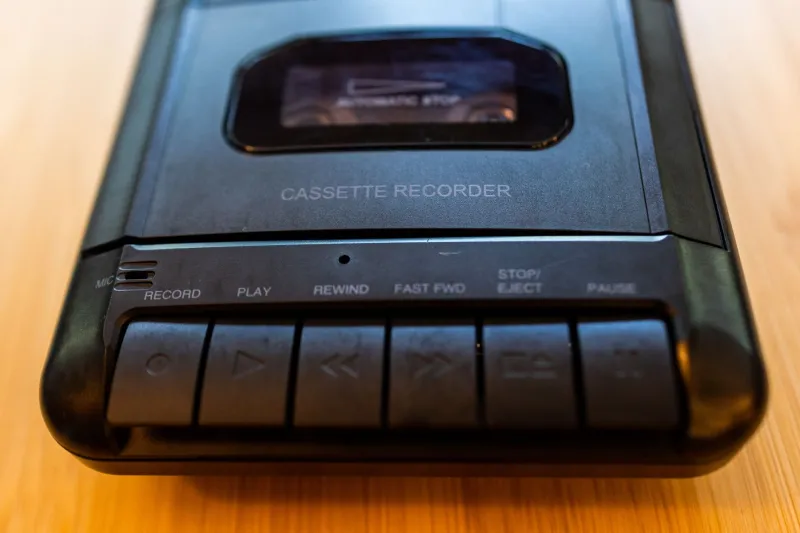
Answering machines weren't designed to be memorials. They were designed to catch calls when you were in the shower or at the grocery store. The cassette tapes, the blinking red lights, the little speaker that crackled to life — all of it was purely functional. Nobody sat down in 1984 and thought, someday this is going to be the last place a person's voice lives.
But that's exactly what happened.
When someone dies suddenly — or disappears, or simply walks out of your life — you don't get a warning that their voicemail greeting is about to become the most precious thing you own. You don't get time to record it, to back it up, to do anything deliberate with it. One day it's just a minor inconvenience (they're not picking up again), and the next it's a relic.
The problem, and it's a genuinely modern one, is that these recordings are fragile in ways we didn't anticipate. Cell carriers delete inactive accounts. Phone numbers get recycled. A family cancels a plan during the chaos of settling an estate and the voice is just... gone. No ceremony, no warning, no goodbye.
Some people have started racing against that clock.
The Preservationists
There are entire Reddit threads dedicated to the logistics of saving voicemail greetings. People share workarounds — apps that record your screen audio, third-party services that archive messages, the specific steps required to get a carrier to hold an account open past its cancellation date. The desperation in some of those posts is real and raw. My dad passed three weeks ago and I can't figure out how to save his outgoing message before the account closes. Please help.
Others have gone further. There are small, informal communities — you'd barely call them organized — of people who treat old answering machines the way antique collectors treat furniture. They haunt estate sales and thrift stores, buying up physical machines not for the hardware but for the tapes still inside them. Most are blank or mundane. Some aren't.
One collector in Portland described finding a machine at an estate sale with fifteen years of outgoing message recordings still on the internal memory — the family had upgraded the greeting periodically, but the machine had quietly saved every version. A whole audio timeline of one person's life, from young and businesslike to older and slower, preserved entirely by accident in a $4 Goodwill purchase.
That's not a metaphor. That actually happened.
Why a Voice Does What a Photo Can't
Here's the thing that grief counselors and neuroscientists have both started paying attention to: a voice hits differently than an image. A photograph is static. It freezes a moment, sure, but it doesn't move, it doesn't breathe, it doesn't have rhythm or warmth or the particular way someone's tone drops when they're trying to sound professional but can't quite pull it off.
A voice is alive in a way that images simply aren't. When you hear a recording of someone you've lost, your brain doesn't fully register the past tense. There's a neurological half-second where it just hears the person — and in that half-second, they're not gone.
That's what people are chasing when they dial those numbers. Not closure. The opposite of closure. The brief, irrational, desperately human experience of hearing someone be present one more time.
It's also, if we're being honest, a little eerie. There's a reason ghost stories so often involve voices — a phone ringing in an empty house, a recording that shouldn't exist, someone calling your name from a room you know is empty. We are culturally primed to understand that a disembodied voice is a haunting. And yet when it's someone we loved, we don't call it haunting. We call it comfort. We call it holding on.
Maybe the line between those two things is thinner than we like to admit.
The Cases That Complicate Everything
The preservation of voices gets even more complicated — and more loaded — when the person behind the recording didn't die but disappeared. True crime followers know this territory intimately. In missing persons cases, a subject's last voicemail greeting often becomes evidence, analyzed for tone and background noise and any detail that might suggest state of mind. Families listen to those recordings obsessively, not just for clues but because it's the only version of okay they have left to hold onto.
There are cases where a missing person's phone number stayed active for years after their disappearance — sometimes because the family kept paying the bill, sometimes because no one thought to cancel it, sometimes deliberately, on the slim and aching hope that one day the person would call their own number and find a message waiting. We're still looking. Come home.
Those cases blur the line between memorial and vigil in ways that are genuinely hard to sit with.
What We're Really Doing
Let's call it what it is: we are building shrines. Not stone ones, not formal ones, but shrines nonetheless. The specific area code, the specific cadence, the particular way someone said leave a message — these are sacred objects now, stored in the cloud or on a cassette in a shoebox or in the muscle memory of a phone number dialed so many times your fingers do it without thinking.
And there's something worth sitting with in the fact that we built this by accident. Nobody designed a grief technology. We just kept our old phones and forgot to cancel our plans and called numbers we knew wouldn't be answered, and somehow we created an entire emotional infrastructure around the voices of people we couldn't bear to lose.
The answering machine was never supposed to be a time capsule. But here we are, pressing play.
Here we are, listening.
Here we are, not ready to hang up.