Just Two Words: How 'Talk Later' Became the Most Haunting Phrase in the English Language
There's a particular kind of torture that comes not from dramatic endings, but from the ones that felt like nothing at all.
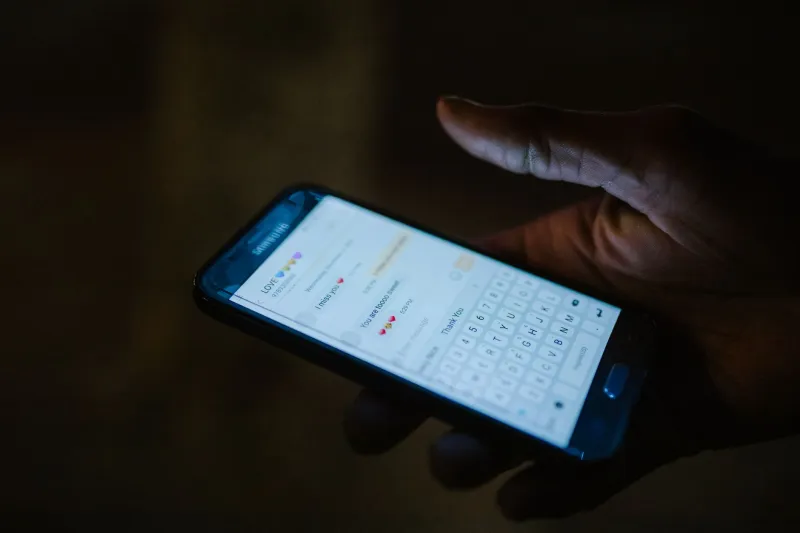
Somebody texts you a meme at 11 p.m. You react with a laughing emoji and fall asleep. Three days later, they're gone — missing, dead, unreachable — and suddenly that meme is a relic. Suddenly your laughing emoji is the last thing you ever gave them, and you'd give anything to take it back and replace it with something real.
This is the strange alchemy that loss performs on ordinary language. It doesn't need grand speeches or tearful goodbyes. It just needs time to stop — and then everything that came before the stopping becomes sacred, whether it deserves to be or not.
The Last Thing Isn't Usually the Thing You'd Choose
We have a cultural obsession with final words. Deathbed declarations, last letters, the dramatic farewell. Movies give their characters perfect closing lines. Songs build to the note that means something. But real life? Real life ends mid-sentence. It ends on a grocery list, a half-finished argument, a "lol k" that nobody thought twice about.
And yet — we think twice about it. We think about it thousands of times.
In documented cases of sudden disappearances across the US, investigators and family members alike consistently report the same phenomenon: the final known communication becomes the most scrutinized object in the entire case. It gets screenshotted, printed, blown up, analyzed for hidden meaning. The grammar gets picked apart. The punctuation becomes a clue. Did she use a period instead of an exclamation point because something was wrong? Did he say "I'll call you" instead of "I'll text you" on purpose?
None of it was on purpose. That's the whole point. And that's also why it's so unbearable.
When the Ordinary Becomes Evidence
Take the case of Maura Murray, the University of Massachusetts student who disappeared in New Hampshire in February 2004. Before she vanished, she sent a brief email to her professor saying she'd be missing class due to a family emergency. She sent a similar message to her work supervisor. Simple, unremarkable messages — the kind any college student might fire off before taking off for the weekend.
Except she never came back.
Those emails have been dissected for two decades. Every word choice, every absence of detail, every thing she didn't say has been treated as a potential window into what she was thinking, where she was going, what she was running from or toward. Online forums have spent years parsing a message that took her probably forty-five seconds to write.
That's not unusual. That's actually the norm.
In the Gabby Petito case, which gripped the country in 2021, her final text messages to her mother became immediate focal points — not just for investigators, but for the millions of armchair detectives who followed the story online. The messages were analyzed for tone shifts. People debated whether certain phrases "sounded like" Gabby or whether someone else might have sent them. A casual check-in became a cryptogram.
We do this because we need there to have been a signal. We need the story to have had a moment where, if someone had just paid attention, everything could have been different.
The Retrofitting Problem
Here's the uncomfortable truth at the center of all of this: we are extraordinarily good at finding meaning that wasn't there.
Psychologists call it apophenia — the tendency to perceive meaningful connections between unrelated things. It's the same impulse that makes us see faces in clouds or patterns in static. When someone disappears or dies, our brains don't switch this off. If anything, they kick it into overdrive.
Every "I love you" they ever said gets reweighted. Every fight you had becomes either a terrible last memory or a sign you were close enough to fight. Every time they seemed distracted or sad, you replay it looking for the thing you missed. And the last conversation — that poor, unsuspecting last conversation — becomes the text you read looking for the story's ending, even though it was never written to be one.
This isn't weakness. It's grief doing what grief does: searching for control in a situation that had none.
But it also means that we're often not actually analyzing the person anymore. We're analyzing our own need for the story to make sense.
When Communities Inherit the Obsession
What's shifted in the last fifteen years or so is that this obsession no longer stays private. It goes online.
The internet has created spaces where strangers collectively inherit the grief of a family they've never met, and with it, the compulsive need to decode those final messages. Reddit threads. TikTok series. True crime podcasts that dedicate entire episodes to a single text exchange. The last words of the disappeared become public property, examined by thousands of people who never knew the person at all.
There's something both beautiful and deeply strange about that. Beautiful because it means no one disappears without witnesses anymore — someone will always be paying attention, always be looking. Strange because it means the most intimate moments of a person's final hours become content, dissected by strangers in their pajamas at midnight.
And yet — those strangers sometimes notice things. They sometimes ask the right question. The collective obsession isn't always wrong.
What We're Really Saying When We Can't Let Go
Maybe the reason we can't stop turning over those final phrases is simpler than we want to admit.
We do it because we're afraid that our own last words will be just as ordinary. That we'll sign off on a conversation that matters to someone with a thumbs-up emoji or a "sounds good" and never know it was the last thing we gave them.
We analyze their final words because we can't go back and change them. And we can't go back and change our own response either — the laughing emoji, the quick reply, the "talk later" we threw out like it was nothing because, at the time, it was.
The haunting isn't really about them. It's about the version of ourselves who didn't know to pay closer attention.
That's the thing about unfinished sentences. They don't stay open because of what the person meant to say. They stay open because of everything we wish we'd said back.
And maybe that's the most human thing about all of it — not the mystery, not the analysis, not the years of forum posts and podcast episodes. Just the simple, gutting wish that the conversation had lasted a little longer.
That we'd said something that meant more than "talk later."
That later had actually come.