Shot for the Record: The Strange Compulsion to Photograph a Life Nobody Asked to See
There's a specific kind of photo that lives on almost every American's phone right now. It's not a birthday. It's not a vacation. It's a parking spot. Or a gas pump reading. Or a lunch plate at a diner where nothing particularly interesting happened. Nobody asked for this photo. Nobody is going to ask to see it. And yet — there it sits, timestamped and geotagged, filed away in a camera roll that stretches back years like some kind of personal court record.
We've all become documentarians of our own mundane existence. The question nobody's really sitting with is: why?
The Witness We Never Needed
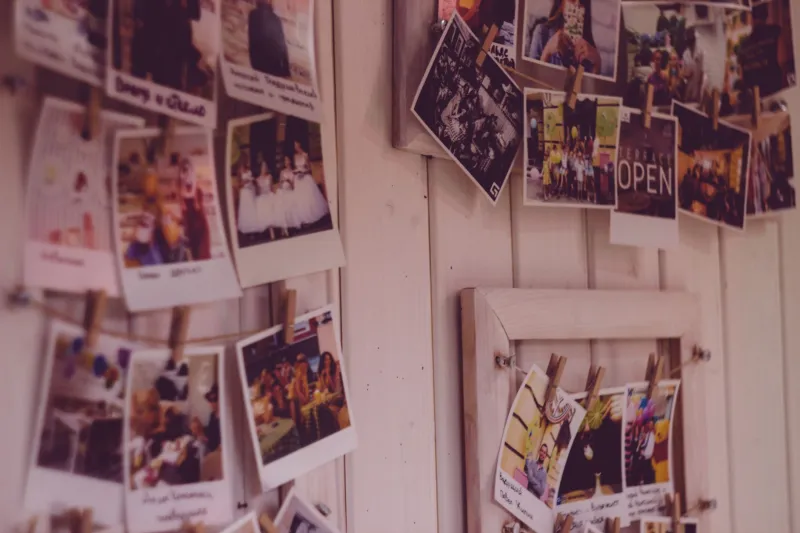
There used to be a logic to photographs. You took them at weddings. At graduations. At the Grand Canyon when you finally drove out there with your dad in the summer of '94. The camera came out because something mattered — because the moment was worth the cost of film, worth the wait at the drugstore counter, worth the small ceremony of sliding prints into a sleeve.
None of that applies anymore. The cost is zero. The wait is zero. And somewhere in that frictionless collapse, we lost the filter that told us what deserved to be remembered.
Now we photograph everything. The sunset that's just okay. The pile of laundry before we fold it. The mileage on a car we're thinking about selling. And more than just photographing — we keep it all. The average American reportedly takes somewhere north of 2,000 photos a year. Most of them will never be looked at again. They just accumulate, quietly, like receipts stuffed into a junk drawer.
Which, honestly, is kind of exactly what they are.
Proof of Life
Here's the theory that keeps nagging at me: we're not documenting memories. We're building alibis.
Not in any criminal sense — though that instinct does show up in weird places, like when you screenshot a conversation before it gets deleted, or photograph your car after a parking lot fender bender before the other driver can claim it didn't happen. Those are obvious. But the deeper version is subtler and maybe more unsettling.
Some part of us doesn't fully trust our own memory. We've all had the experience of swearing something happened a certain way, only to have someone else remember it completely differently. Memory is slippery. It edits itself. It rewrites dialogue and softens the parts we don't want to carry. And in an age where we've watched relationships unravel over disputed texts, where "receipts" have become the currency of online arguments, where people screenshot and archive conversations like they're prepping for litigation — is it really so strange that we've started applying that same logic to our actual lives?
We photograph the moment because some quiet part of us suspects that one day we'll need to prove it happened the way we remember it. To ourselves, if nobody else.
The Fear That Doesn't Have a Clean Name
There's another layer underneath the alibi instinct, and it's harder to talk about without sounding dramatic. It's the fear of being forgotten — not after death, exactly, but in the slower, more mundane way that lives just sort of fade from the record.
Your great-grandmother probably left behind almost nothing. Maybe a few photographs. Maybe a name in a census record. The texture of her daily life — what she made for dinner on a Tuesday in November, what she thought about on the drive to work, the specific way the light hit her kitchen at 4pm — is completely gone. Not just from other people's memory. From history entirely.
For most of human existence, that was simply the deal. You lived, you were loved by a small circle of people, and then the details of your life dissolved. The broad strokes might survive in family stories. The specifics didn't.
Something about modern life has made that feel newly intolerable. Maybe it's social media training us to believe that existing without an audience is somehow incomplete. Maybe it's the sheer availability of documentation — the fact that we could capture everything, which makes choosing not to feel like a kind of negligence. Whatever the cause, a lot of people are walking around with a low-grade, mostly unconscious anxiety about leaving a mark. About proof that they were here, that their ordinary days had texture and color and specificity.
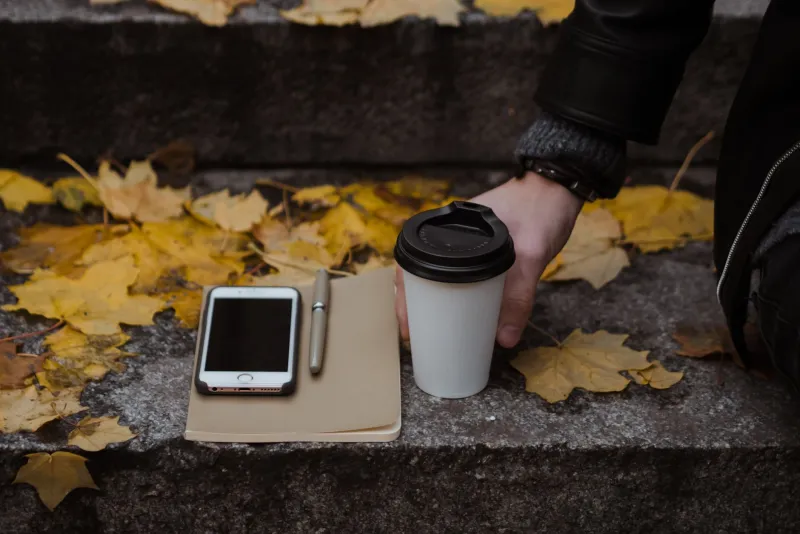
So we photograph the coffee. Not because it's beautiful. Because it's ours, and it existed, and we were there.
The Archive Nobody Will Open
Here's the part that should probably bother us more than it does: almost none of this will survive in any meaningful way.
Cloud storage is a monthly subscription. Phones get lost or broken. Formats change. The 12,000 photos sitting on your device right now are not inherently more durable than a shoebox of prints — they're just differently fragile. And unlike the shoebox, which someone might stumble across in an attic decades from now and actually look through, the camera roll is private by default. It doesn't get passed around at family reunions. It doesn't get taped into a scrapbook. It just exists on a server somewhere, accumulating quietly, until the account lapses or the platform shuts down or the password gets lost in an estate no one knew how to sort through.
We've covered this territory before here at Lost Mary Chronicles — the strange grief of digital archives that disappear without warning, the photos that outlive their owners and then vanish anyway. The documenting impulse is real and deeply human. What we're building to hold it is not.
What We're Actually Doing
Maybe the most honest answer is that photographing the mundane isn't really about the photographs at all. It's a ritual. A small, secular prayer that says: this moment happened, I was in it, it mattered to me even if it mattered to no one else.
There's something genuinely touching about that, even when it looks absurd from the outside. The person photographing their parking spot isn't delusional — they're doing what humans have always done, which is trying to hold onto time with whatever tools they have. Cave paintings were receipts too, in a way. I was here. I saw this. Bear witness.
The difference is that cave paintings were hard. They required effort and intention and the knowledge that not everything was worth the trouble. Our version is effortless, and effortlessness has a cost: we've lost the ability to distinguish between what's worth preserving and what's just noise.
So the camera roll fills up. The parking spots and the coffee cups and the gas pump readings stack up alongside the actual memories — the birthday dinners, the last photos with people who are gone now, the accidental shots that somehow captured something true. All of it mixed together, unedited, unranked, waiting for a future self who probably won't have the time or the heart to sort through it.
Maybe that's fine. Maybe the archive doesn't need to be curated to mean something. Or maybe we're building monuments to our own lives that no one — including us — will ever actually visit.
Either way, we keep shooting. Just in case.