On Repeat Until It Hurts: The Albums We Can't Stop Playing When Someone Goes Missing From Our Lives
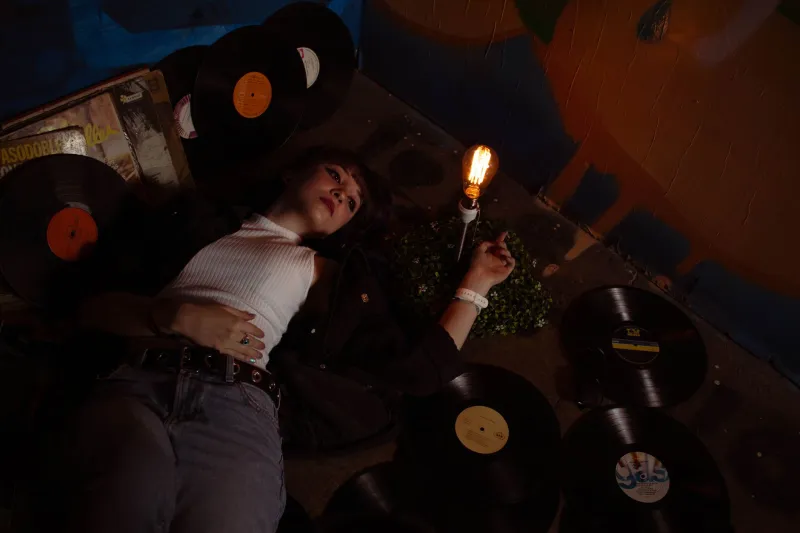
Somewhere right now, someone is sitting in a dark room playing the same eleven songs they've had on repeat for three weeks. Maybe it's a Phoebe Bridgers record. Maybe it's something older — Elliot Smith, Mazzy Star, the kind of music that sounds like it was recorded specifically for the moment your world went quiet in the worst possible way. They're not listening for pleasure. They're listening because stopping feels like giving up on something they can't fully name.
Grief has a soundtrack. Not by choice, exactly — more by accident, and then by compulsion. A song gets tangled up in a specific moment of loss, and suddenly it becomes something more than music. It becomes a portal. A container. A very small, very precise time machine that drops you back into the exact emotional coordinates of the day everything changed.
This is one of the stranger things humans do. And we almost never talk about it.
How a Song Gets Recruited Into Your Grief
It doesn't take much. You were playing something in the car when you got the news. You put on a familiar album that first sleepless night because silence felt too loud. A friend sent you a track with a message that just said this made me think of you, and now you can't separate the two things anymore.
Psychologists call this state-dependent memory — the idea that we encode memories more powerfully when we're in a heightened emotional state, and that returning to the same sensory cues can reactivate those memories with unusual intensity. Music, more than almost any other stimulus, has a direct line to the brain's limbic system, the part responsible for emotion and memory. Which means a three-minute song can store more emotional data than a photograph. More, sometimes, than a written account of what happened.
The album doesn't just remind you of the loss. It reconstructs it. You're not remembering — you're briefly reliving, which is exactly as painful and exactly as necessary as it sounds.
The Illusion That the Music Knows Something You Don't
Here's the part that's harder to explain rationally: why we keep going back as if the album might finally tell us something new.
When someone disappears from your life — whether through death, estrangement, or literal unexplained absence — you are left holding a story with no ending. The human brain is not built for unresolved narratives. We crave closure the way we crave water. We will manufacture meaning from almost anything to fill the gap.
And music, by its nature, is full of ambiguity. Lyrics bend. Metaphors shift depending on who's listening and what they've lost. That line you never paid attention to before? The one in the bridge of track six? It suddenly sounds like it was written about this. About them. About you.
So you play it again. And again. Because some part of your brain has decided, on a level below conscious reasoning, that if you listen carefully enough, the song will finally give you the ending your real life is refusing to provide.
It won't. But that doesn't stop anyone.
The Albums That Became Cultural Grief Anchors
Some records seem almost designed to absorb collective loss. Sufjan Stevens' Carrie & Lowell — made in the aftermath of his mother's death — became a go-to record for anyone navigating complicated grief, the kind that comes wrapped in ambivalence and old wounds. Blue by Joni Mitchell has been quietly accompanying heartbreak and absence for over fifty years. More recently, albums like Adrianne Lenker's abysskiss or even Taylor Swift's folklore found themselves adopted by listeners as soundtracks to very specific private losses that had nothing to do with the artist's original intent.
That's the thing about grief music — it gets borrowed. An artist makes something from their own wound, and a stranger picks it up and makes it theirs. The song becomes a kind of shared infrastructure for feelings that resist ordinary language.
In true crime communities, this phenomenon takes on an additional layer. Families and followers of missing persons cases often describe specific songs as becoming permanently associated with a case — music that was meaningful to the person who vanished, or songs that circulate in memorial spaces online. The music becomes part of the mythology. It gives shape to an absence that otherwise has no edges.
Why We Don't Just Stop Playing It
The obvious question is: if the music hurts, why not just... turn it off?
Because grief is not interested in what's comfortable. And because, strange as it sounds, the pain of the music is often preferable to the alternative — which is silence, and in that silence, the terrifying possibility that you might start to forget.
Repeating the album is a ritual. It's a way of saying: I have not moved on. I have not let this go. I am still here, still paying attention, still holding the space where you used to be. There's loyalty in it. There's a kind of love in it that has nowhere else to go.
For people dealing with disappearances — the particularly brutal kind of loss where there's no body, no confirmed ending, no grave to stand beside — music sometimes becomes the only tangible ritual available. You can't attend a service. You can't say a final goodbye. But you can put on the album they loved, or the album you played the night they stopped answering their phone, and you can sit with it. That counts for something. It might be the only thing that counts.
The Three-Minute Time Capsule
What's remarkable, when you step back and look at it, is how much a single song can hold. A specific quality of light. The temperature of a particular autumn. The exact feeling of waiting for a call that never came. All of it compressed into three minutes and forty-two seconds, perfectly preserved, available on demand.
In that sense, the albums we play on repeat during our worst moments are doing something genuinely extraordinary. They're functioning as emotional archives — more precise than journals, more portable than photographs, more honest than anything we could have written down ourselves in the fog of those early days.
We come back to them because they hold us, even when nothing else does. Because the song doesn't ask us to be okay. It doesn't tell us it's time to move forward. It just plays, and while it plays, the person we lost is somehow — impossibly, briefly — still right there in the room.
And then the album ends. And we press play again.