Gone Quiet: The Digital Versions of Us That Vanished Without Warning

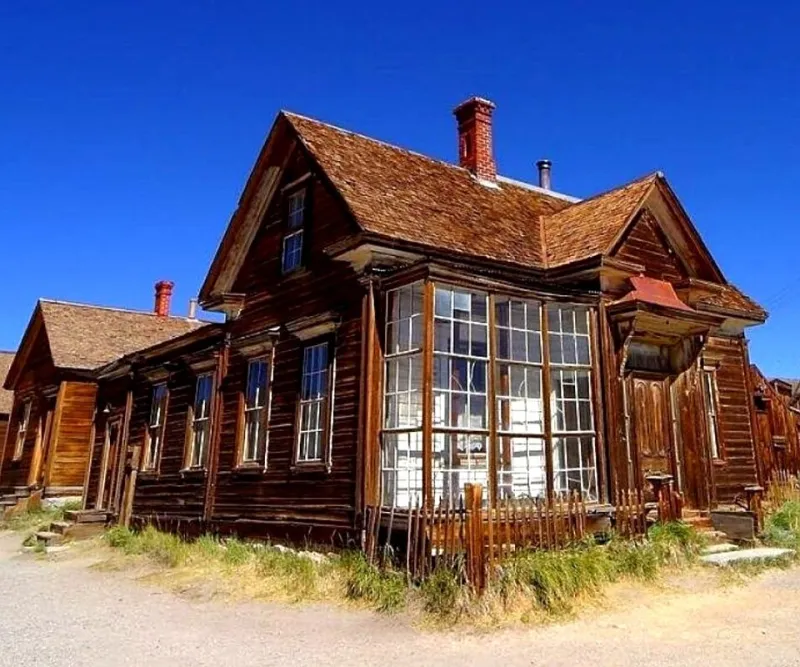
Photo: Alejandro Escamilla alejandroescamilla, CC0, via Wikimedia Commons
Somewhere out there — or rather, nowhere out there anymore — is a version of you that no longer exists.
Maybe it's the MySpace page you forgot the password to sometime around 2009. Maybe it's the Tumblr account that got wiped in that infamous 2018 content purge. Maybe it's the Twitter profile of a friend who passed away, which their family eventually deactivated because they couldn't figure out what else to do with it. Maybe it's just a Facebook account from 2011, full of inside jokes and tagged photos and status updates that felt so permanent when you wrote them.
All of it, gone. Not archived. Not stored somewhere you can access later. Just gone.
We've spent twenty-plus years pouring ourselves into digital platforms with the implicit assumption that the record would stick around. It turns out we were wrong about that in ways we're only starting to reckon with.
The Illusion of Permanence
The early internet sold us a particular fantasy: that everything posted online lived forever. Embarrassing photos, bad takes, teenage oversharing — the cultural conversation around digital permanence was almost entirely framed as a warning. Be careful what you put out there. The internet never forgets.
Except it does. It forgets constantly, and on a massive scale.
Platforms get acquired and shut down. Server costs become untenable. Companies pivot, rebrand, or collapse. Inactive accounts get purged under terms of service clauses nobody reads. Vine — which hosted hundreds of millions of videos and launched the careers of creators who went on to shape a decade of American pop culture — was shut down in 2017. A dedicated group of volunteers scrambled to archive what they could. They didn't get everything. Not even close.
GeoCities, which at its peak was the third most visited site on the internet, was deleted by Yahoo in 2009. An estimated 38 million user-created pages, gone. The Internet Archive's GeoCities preservation project saved a portion of it. A portion.
This is the pattern. Platforms rise, platforms fall, and the personal histories people built inside them become collateral damage.
It's Not Just Nostalgia — It's Record-Keeping
Here's where it gets more serious than just missing your old profile picture.
Social media, for all its documented dysfunction, became the primary way millions of Americans documented their daily lives over the past two decades. Not in journals. Not in photo albums. Online. Status updates captured how people felt during major cultural moments — elections, disasters, deaths, celebrations. Comment threads preserved arguments and reconciliations and community responses to news events in real time.
When those records disappear, historians lose something genuinely irreplaceable. Academic researchers studying everything from how misinformation spread during the early COVID months to how regional communities responded to local tragedies have already run into walls where the primary sources simply no longer exist. The posts were deleted. The accounts were suspended. The platform changed its API and cut off the data.
Future generations trying to understand what American life looked like between 2005 and 2025 will be working with a record that is, to put it bluntly, full of holes shaped exactly like us.
The Personal Grief of a Deleted Profile
Set aside the macro for a second, because the personal losses matter too — maybe more, in the day-to-day.
Think about how many people have lost access to photos that existed only on a social platform. Pictures that were never downloaded, never printed, never backed up anywhere else. When Instagram or Facebook deletes an inactive account, those images don't go to a digital purgatory. They're erased. When someone dies and their family doesn't act quickly enough — or doesn't know they need to act at all — years of a person's documented life can vanish inside a platform's inactivity policy.
There's a specific kind of grief in trying to find an old post from someone you loved and discovering that the account is just... not there anymore. No error message that means something. No archive link. Just absence where a person used to be.
Lost Mary Chronicles has always been drawn to the stories that linger after something disappears — the echo of a presence that can no longer be found. Digital deletion does this to real people, and we've normalized it almost completely.
The Platforms Were Never Libraries
The brutal honest truth is that we made a category error somewhere around 2007 and never fully corrected it. We treated social media platforms like public archives when they were always, at their core, private businesses with their own interests.
Libraries have preservation mandates. Museums have acquisition policies and conservation budgets. Social media companies have quarterly earnings calls and shareholders. When preserving your 2013 posts becomes a cost center rather than a revenue stream, your 2013 posts lose.
The Internet Archive — a nonprofit, not a corporation — has done more to preserve the digital record than any platform ever has or likely ever will. The Wayback Machine has crawled and saved billions of web pages since 1996. But it can't capture everything, especially content locked behind logins or generated dynamically. And it runs on donations.
We built our collective memory on infrastructure that was never designed to hold it.
What Gets Lost When We're Lost
There's a version of you that existed online in 2012 — maybe idealistic, maybe embarrassing, maybe just achingly young — that is either already gone or will be gone soon. Not because you chose to delete it, necessarily. Because the platform evolved, or the company sold, or an inactivity policy kicked in, or any number of invisible mechanisms decided that your history had exceeded its storage value.
And here's what that means for the future: the people who come after us will look back at this era and find a record that is strangely, unevenly incomplete. They'll find some things — the accounts of celebrities, the posts that went viral and got archived by journalists, the content that was famous enough to be screenshotted and reshared. But the ordinary stuff, the texture of daily digital life, the unremarkable moments that make up most of what any human actually experiences? A lot of that is already gone.
We were here. We posted about it. And then, quietly, the timeline deleted us anyway.