The Stories Still Standing: What America's Abandoned Places Remember So We Don't Have To
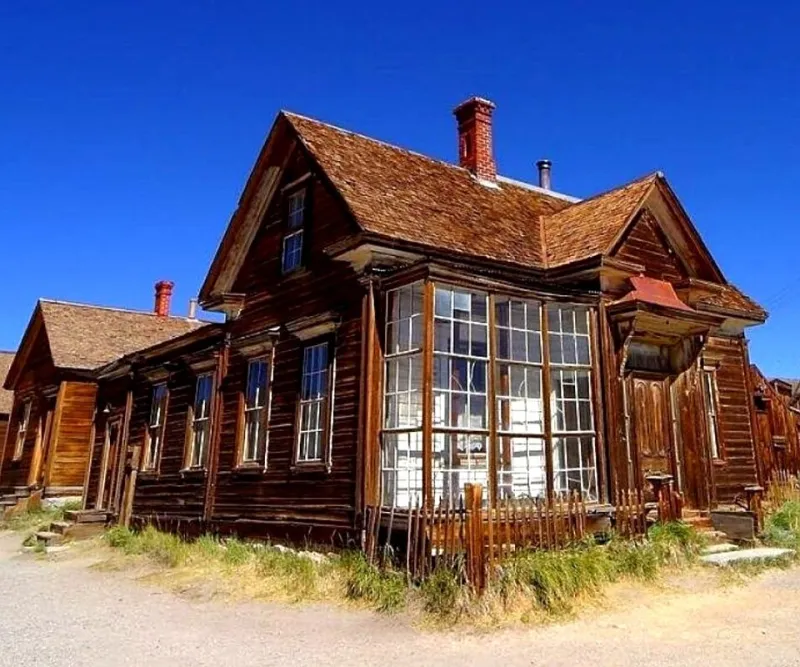
Photo: Fixwoon.com, CC BY-SA 4.0, via Wikimedia Commons
There's a particular feeling you get standing in a place that used to be full of people. It's not quite sadness, not quite wonder. It's something in between — a low hum of recognition that life was here, that it mattered, and that it ended anyway. Anyone who's ever wandered through a shuttered factory town in Pennsylvania, poked around the edges of a decaying plantation in Louisiana, or stumbled across a roofless church in rural Nevada knows exactly what I mean.
Abandoned places in America aren't just photogenic backdrops for urban explorers. They're something more complicated than that. They're the physical record of everything we chose, or were forced, to leave behind.
Centralia and the Fire That Never Went Out
Let's start with the most dramatic example, because Centralia, Pennsylvania earns its reputation. Beneath the borough's cracked, weed-split streets, a coal seam fire has been burning since 1962. The smoke still rises through fissures in the ground. Most of the town's residents were relocated by the 1990s. The population, which once hovered around a thousand, has dwindled to fewer than ten people.
Centralia is the kind of place that makes you feel like reality is slightly tilted. Graffiti-covered Route 61 — the old highway that was shut down after the ground beneath it began to buckle — has become a pilgrimage site for people who drive hours just to walk a road going nowhere. The town inspired the Silent Hill video game franchise, which probably did more to cement its mythology than any news article ever could.
But beyond the horror-movie aesthetics, Centralia holds real stories. Mining families who built their lives there over generations. A community that fought relocation for years because leaving felt like erasing everything they'd worked for. The fire didn't just displace people — it swallowed an entire way of life, and the empty lots and crumbling foundations are the only monuments those families ever got.
Bodie and the Mythology of the Ghost Town
Out in the high desert of eastern California, Bodie sits exactly as it was left. Not restored, not curated — just arrested in time. California maintains it in a state of what they officially call "arrested decay," which is a phrase that sounds like it belongs in a poem. Paint peels from the walls of the old saloon. A child's shoe sits on a shelf in an abandoned home. A pool table still holds its balls in mid-game.
Bodie boomed as a gold mining town in the late 1870s and was home to nearly ten thousand people at its peak. By the 1940s, it was empty. Now roughly 170 structures remain, and the state park draws visitors from all over the country who come to walk streets that once hosted everything from gunfights to church socials.
What's striking about Bodie isn't just the visual drama of it. It's the specificity. The personal items left in houses — dishes, medicines, furniture — suggest departure more than abandonment. People left in a hurry, or they left intending to come back. The town didn't die all at once; it bled out slowly over decades as the gold ran dry and the residents trickled away, each one probably believing someone else would stay.
That's the story most ghost towns tell, if you listen closely. Not catastrophe. Just the slow math of economic reality.
Who Gets Remembered and Who Gets Erased
Here's where it gets complicated, and worth sitting with.
Not all abandoned places become shrines. Not all of them attract tourists or inspire documentaries or end up on lists of "most haunted locations in America." Some just disappear — absorbed by vegetation, demolished for development, or simply ignored until there's nothing left to look at.
The places that get preserved, mythologized, or even just photographed tend to share certain characteristics. They're often tied to predominantly white histories. They're often associated with a particular kind of American narrative — the frontier, the industrial age, the small-town ideal. Meanwhile, entire communities that were displaced, destroyed, or deliberately erased get far less attention.
Rosewood, Florida — a prosperous Black community burned to the ground in a 1923 massacre — existed for decades as a kind of forbidden history, its story actively suppressed and its physical traces almost entirely gone before scholars and journalists began recovering it in the 1980s. Greenwood, the Tulsa neighborhood known as Black Wall Street, was devastated in 1921 and its history similarly buried for generations. These weren't places that simply faded — they were taken.
When we romanticize abandonment, we have to be honest about the difference between places that were left and places that were destroyed. The nostalgia industry around ghost towns and derelict buildings doesn't always make that distinction clearly.
Why We're Drawn to These Places
So why do we keep going? Why do millions of Americans seek out the ruined, the decayed, the left-behind?
Part of it is the same impulse that drives people to true crime podcasts or unsolved mystery forums — a hunger for narrative that reality didn't finish writing. An abandoned building is a story with its ending torn out. You walk through it and your brain automatically starts filling in the gaps. Who lived here? What did they want? What went wrong?
There's also something about scale. In a culture that moves fast and builds over everything, ruins offer a rare kind of stillness. They're proof that things don't always get replaced. That sometimes, something ends and nothing comes after it. That's unsettling, but it's also honest in a way that feels increasingly rare.
And then there's the nostalgia angle — the way these places hold a version of America that we can examine from a safe distance. The industrial Midwest town that never recovered from deindustrialization. The resort community that thrived before the interstate highway rerouted traffic. The mining camp that lasted exactly as long as the ore did. These places are physical evidence of how contingent prosperity really is, how much of what we build depends on forces we don't fully control.
What the Walls Remember
If you ever get the chance to stand in a genuinely abandoned place — not a staged attraction, not a curated museum, but somewhere that was just left — pay attention to what you feel. Not the Instagram composition. Not the aesthetic. The actual feeling of a space that once held ordinary life and now holds only its echo.
That feeling is the closest most of us will ever get to touching history directly. No interpretive panel, no audio guide, no docent with a rehearsed speech. Just the weight of time, and the faint impression of everyone who came before.
America has always been better at moving forward than at looking back. These places are the exception — the spots where the past refused to be paved over, where the story insisted on staying visible just a little longer.
They won't last forever. But while they're still standing, they're worth listening to.