Trapped in the Cloud: The Personal Photo Archives No One Will Ever Actually See
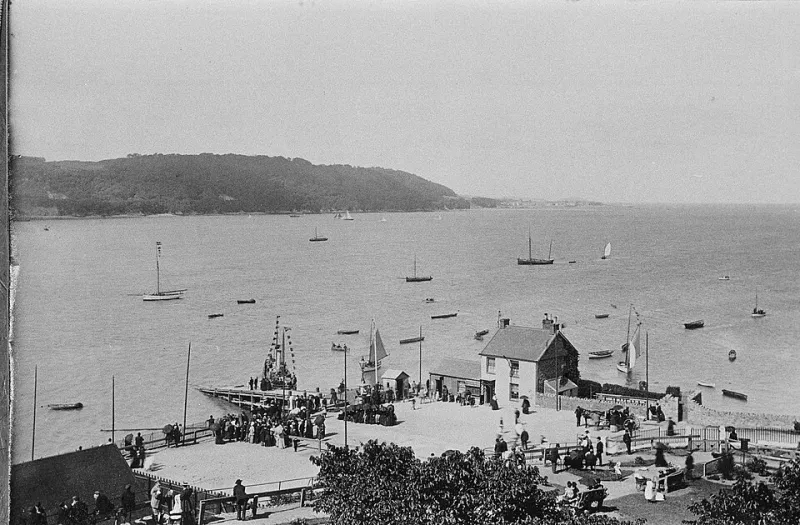
Photo: Geoff Charles, CC BY-SA 4.0, via Wikimedia Commons
There's a shoebox in my aunt's closet that holds thirty years of family history. Faded Kodak prints from the late seventies. A Polaroid of my mom at sixteen, squinting into the summer sun. Birthday parties nobody fully remembers but can reconstruct, detail by detail, just by holding the photo up to the light. That shoebox has survived three moves, a basement flood, and decades of general neglect. It's still there. Still legible. Still real.
Now ask yourself where your photos from 2015 are.
If you have to think about it for more than three seconds, you've already stumbled into the problem.
We Took More, But Saved Less
The numbers are genuinely staggering. Americans take somewhere in the neighborhood of 1.4 trillion photographs every single year — a figure that would have sounded like science fiction to anyone who grew up waiting two weeks for a roll of film to come back from the drugstore. The cost of capturing a moment has dropped to essentially zero, and so we capture everything. The sandwich. The sunset. The face your dog makes when he hears the word walk.
But here's the quiet tragedy hiding inside all of that abundance: volume isn't the same thing as preservation. In fact, they might be opposites.
When photos cost something — money, effort, a finite number of exposures on a roll — people made choices. They printed the ones that mattered. They put them in albums with little sticky corners, or tucked them into envelopes labeled in handwriting you'd recognize anywhere. The act of printing was also, whether anyone thought of it that way or not, an act of curation. Of saying: this one counts.
Now nothing gets printed, and so in a strange way, nothing gets chosen. Everything sits in an undifferentiated pile of ten thousand images, technically accessible, practically invisible.
The Graveyard of Old Devices
If you've ever tried to recover photos from a phone you stopped using four years ago, you already know how this story goes. Maybe the charging port is dead. Maybe the operating system is so outdated that nothing will sync with it anymore. Maybe it just... doesn't turn on. Somewhere inside that black rectangle is a version of your life — vacations, relationships, a face you used to see every day — and it is completely, stubbornly out of reach.
This is the part of the digital photo story that doesn't get talked about enough. We tend to frame obsolescence as a technology problem, something for engineers to solve. But it's also a memory problem. A legacy problem. The photos that survived from the 1940s survived because paper is a remarkably stable medium. The photos sitting on a 2014 iPhone are dependent on a chain of compatible hardware, software, and institutional goodwill that could snap at any link.
And cloud storage, the thing we were all told would solve this, has its own quiet failure modes. Accounts get deleted after inactivity. Companies shut down — remember Flickr's near-death experience? Google Photos quietly changed its unlimited storage policy. Passwords get forgotten, email addresses get abandoned, and the recovery options attached to them go dead. The cloud turns out to be less like a vault and more like a very large room with an unlocked door that you keep meaning to go back through.
What Future Generations Are Going to Find
Think about what it means to research your family history. For most Americans tracing their roots, the paper trail — census records, letters, printed photographs — is what makes the past feel inhabited by actual human beings rather than just names on a spreadsheet. You can look at a great-grandmother's face in a photograph and know something about her that no document can tell you.
Now imagine a grandchild fifty years from now trying to piece together who you were in your thirties. Your printed photos, if you have any, probably stopped somewhere around 2008. Everything after that lives in formats that may not be readable, on platforms that may not exist, behind passwords that died with you.
This isn't a hypothetical doomsday scenario. Archivists and digital preservation experts have been raising this alarm for years. The Library of Congress has entire programs dedicated to the problem of born-digital materials degrading or becoming inaccessible faster than anyone anticipated. What's true for institutions is doubly true for individuals, who don't have archivists on staff.
The Nostalgia We're Not Going to Get to Have
There's something else worth naming here, something a little harder to quantify. Part of what makes old photographs powerful isn't just that they document events — it's the experience of encountering them. Finding a photo you forgot existed. Stumbling across it in a box, or in the back of a drawer. The surprise of it. The way it pulls you somewhere you haven't been in years.
Scrolling through your camera roll doesn't do that. It's too orderly, too searchable, too present. The algorithm serves you Memories on your birthday and calls it nostalgia, but it's a curated, sanitized version of the thing — nostalgia with the rough edges filed off, delivered on a schedule.
The shoebox in my aunt's closet works because it's a little chaotic. Because you never quite know what you're going to find. That randomness is part of how memory actually operates, and printed photos honored it in a way that digital libraries, for all their convenience, simply don't.
It's Not Too Late, But It's Getting There
None of this is meant to be a lecture about printing your photos, though honestly — print some of your photos. Services like Chatbooks, Artifact Uprising, and even the old-fashioned local drugstore photo counter still exist and still work. Pick fifty images from the last five years and put them somewhere physical. Future you will be grateful.
But the bigger point is about paying attention to what we're quietly losing in the name of convenience. Every generation thinks its technology is permanent. The people who shot home movies on 8mm film in the 1960s thought those reels would last forever too.
Some of them did. Most of them didn't.
The question isn't whether digital photography is good or bad — it's changed everything about how we see and share our lives, and mostly for the better. The question is whether we're being honest with ourselves about what keeping something actually requires. A file isn't an archive. A cloud folder isn't a memory. And a photo nobody can open is, in every way that matters, a photo nobody took.