The Legend Dies When You Google It: What Happens to Scary Stories in the Age of Instant Answers

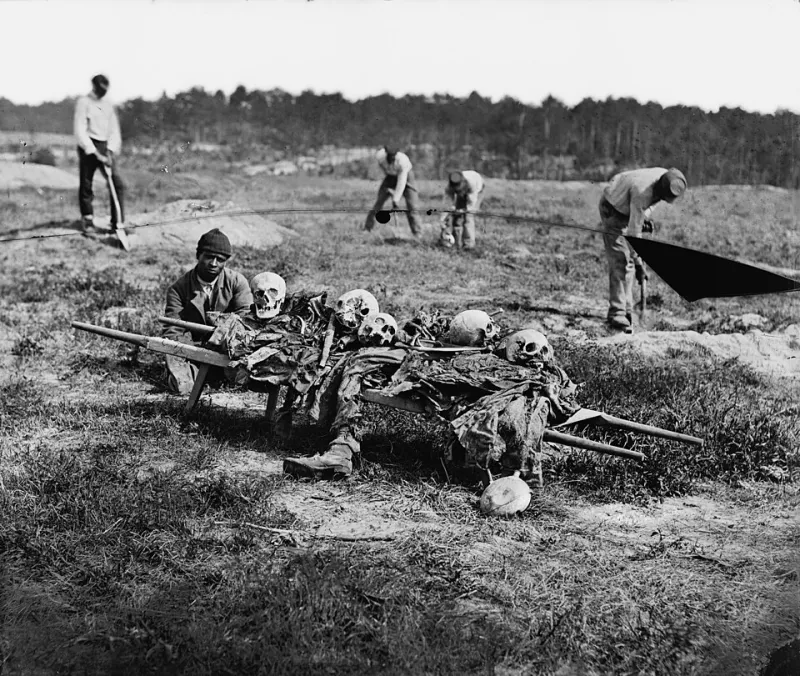
Photo: Sertion, CC BY-SA 3.0, via Wikimedia Commons
Somewhere in the mid-nineties, every kid in America knew about the hook. The escaped killer with a hook for a hand, lurking near lovers' lanes. Nobody knew exactly where it happened. Nobody could name the town or the year or the couple involved. That vagueness wasn't a bug in the story — it was the whole point. The hook man worked because he existed in a space that couldn't be verified. He lived in the gap between what you knew and what you couldn't check.
Now imagine that story trying to survive Twitter.
Within forty-eight hours, someone would have traced the earliest known printed version. A Snopes article would exist. A Reddit thread would have seventeen competing theories about its origins, three of which would actually be correct. The hook man would still be out there, technically, but he'd be explained — and explained things have a much harder time being frightening.
How Legends Used to Grow
Classic American urban legends didn't start as stories. They started as rumors — half-heard things, passed along at slumber parties and lunch tables and late-night drives. Each retelling added something. Removed something. Moved the setting one town closer to wherever the listener happened to live. The babysitter and the phone calls coming from inside the house. The vanishing hitchhiker. Bloody Mary in the bathroom mirror.
Folklorists have a term for this process: ostension, the way legends get acted out and adapted by the communities that carry them. The story belongs to everyone who tells it, which means it belongs to no one — and that collective, anonymous ownership is a big part of what gives folklore its power. You can't debunk a story that doesn't have a single author, a fixed text, or a verifiable origin point.
The mechanics of oral tradition were, in other words, basically perfect for keeping a scary story scary. Word of mouth is slow. Slow means time to mutate. Mutation means the story stays alive, stays local, stays yours in a way that a Wikipedia article never quite can be.
The Internet Didn't Kill Folklore — It Turbocharged It
Here's where it gets complicated, though, because the easy narrative — the internet ruined urban legends — isn't quite right either.
The internet created Slender Man. It created the Backrooms. It created an entire ecosystem of creepypasta that, at its best, genuinely captured the texture of folklore: anonymous authorship, collaborative evolution, the sense that the story had always existed somewhere and was only now being discovered. Jeff the Killer spread like a rumor. The SCP Foundation built a mythology so elaborate and internally consistent that it functions as a genuine shared fictional universe — one that a lot of people encountered without initially knowing it was fiction.
So the internet isn't anti-folklore. It's actually remarkably good at generating the form of folklore, the aesthetics of it. What it struggles with is sustaining the uncertainty that makes folklore feel dangerous.
The Fact-Check Problem
This is the core tension: modern legends spread faster than any story in human history, but they also get investigated faster. The same platforms that can carry a creepy story to ten million people overnight also carry the debunking, the origin story, the interview with the person who made it up, and the YouTube video essay breaking down why it doesn't hold up.
Slender Man is a perfect case study. The character was created by Eric Knudsen — username Victor Surge — on a Something Awful forum in 2009. That fact is not hidden. It's not obscure. It took approximately thirty seconds to find while writing this. And yet Slender Man became genuinely frightening to a generation of kids, frightening enough that in 2014, two twelve-year-olds in Wisconsin stabbed a classmate in what they described as an attempt to appease him.
The documented origin didn't protect those kids from the legend. Which tells you something important: knowing a story is made up doesn't fully inoculate you against it. The emotional logic of folklore operates on a different track than rational knowledge. You can know, consciously, that Bloody Mary isn't real and still feel your stomach drop when you're standing alone in a dark bathroom.
But — and this is the key thing — that split only works when the story has had time to sink in. When it's had time to feel like it predates you. Internet legends often don't get that time. They arrive fully assembled, with receipts.
Why New Legends Feel Different
Spend any time in corners of the internet dedicated to paranormal stories, creepypasta, or modern mythology, and you'll notice a particular kind of frustration that comes up constantly. People describe newer stories as feeling thin. Too polished. Too aware of themselves. Classic urban legends felt like warnings passed down for a reason. New ones often feel like creative writing exercises — impressive, sometimes genuinely unsettling, but somehow lacking the weight of something that might be true.
Part of that is the author problem. When you know someone invented a thing, it becomes their thing. It can be good. It can be scary. But it can't be folklore in the deepest sense, because folklore is defined by its rootlessness — by the fact that it belongs to the culture rather than to an individual. The moment Slender Man got a Wikipedia page with a creation date and a creator's name, something shifted. He became intellectual property masquerading as myth.
There's also something lost in the speed. A legend that takes twenty years to travel from New England to the Pacific Northwest arrives carrying the weight of all those retellings. It's been tested. Refined. The parts that didn't work got dropped. What remains is whatever was resonant enough to survive the journey. Internet legends don't get that refinement process — they arrive raw, and the culture doesn't have time to figure out which parts actually matter before the next thing shows up.
What Survives the Search Bar
The legends that do manage to stick around in the internet age tend to share a few qualities. They're vague enough that fact-checking doesn't fully resolve them. They tap into anxieties that are genuinely hard to rationalize away — fears about technology, about surveillance, about the uncanny valley of AI and deepfakes. They feel current in a way that hooks and vanishing hitchhikers no longer do.
The story of someone receiving messages from a dead loved one's phone number. The glitch-in-the-matrix experiences people share on Reddit — moments where reality seemed to hiccup in a way that no explanation quite covers. These work because they're personal, unverifiable, and tied to technologies that most people don't fully understand. Mystery, it turns out, relocates rather than disappears.
Folklore is adaptive. It always has been. The hook man was a story about the dangers of parking somewhere dark and private — a very specific mid-century American anxiety. The legends that haunt us now are about data and identity and whether the digital world we've built around ourselves might be doing something to us that we can't quite name.
The search bar didn't kill the ghost story. It just made the ghost harder to see.