True Crime's Dirty Secret: The Real Cases Buried Under Your Favorite Fictional Thrillers
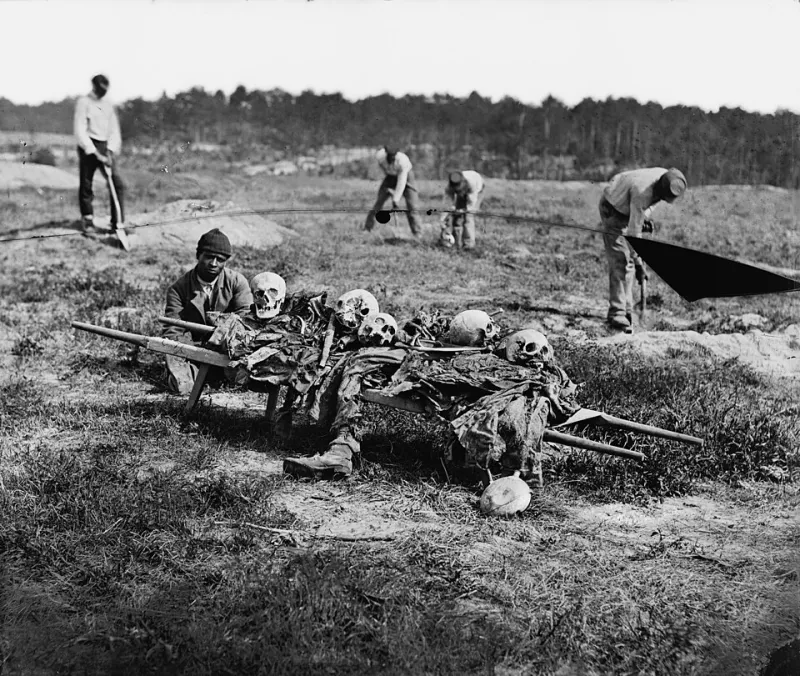
Photo: John Reekie, colorized by Hal Jespersen, Public domain, via Wikimedia Commons
Somewhere in a small town in the American Midwest, a family has spent decades trying to get people to pay attention to a case that went cold before most of us were born. Meanwhile, a thriller novelist who once read a paragraph about that case in a regional newspaper has sold three million copies of a book inspired by those same events. The family has never been contacted. They've never seen a dime. And the details that matter most — the ones that might actually help solve what happened — are buried under two hundred pages of invented drama.
This is not a hypothetical. It's a pattern.
The Inspiration Industrial Complex
The true crime genre — across podcasts, streaming series, novels, and prestige TV — has become one of the most commercially dominant categories in American entertainment. My Favorite Murder built a devoted community of millions. Serial essentially relaunched the podcast medium. Gillian Flynn's Gone Girl and its many spiritual successors turned the domestic thriller into a publishing phenomenon that shows no sign of slowing down.
And nearly all of it, at some level, traces back to real events.
Sometimes that connection is explicit and well-documented. Mindhunter drew openly from FBI case files. The Staircase was a direct dramatization. But there's a whole other category of influence that operates more quietly — cases that never made national headlines, families that never got a documentary crew, disappearances that were absorbed into the cultural bloodstream and reemerged as "fiction" without anyone involved being notified or credited.
These are the stories worth looking at more carefully.
When "Inspired By" Means Something Darker
Take the broad genre of small-town disappearance fiction — a category that has essentially become its own publishing subgenre at this point. The template is familiar: a young woman vanishes from a tight-knit community, dark secrets surface, the investigation reveals something rotten at the town's core. It's compelling. It sells.
It's also drawn, repeatedly and often without acknowledgment, from real cases that remain unsolved.
Researchers and true crime journalists have noted that certain cold cases — particularly those involving young women in rural areas, cases that received minimal media coverage at the time — have a habit of resurfacing in the plot summaries of bestselling novels. The names change. The geography shifts. But the specific details: the timeline, the relationships, the particular circumstances of the disappearance, sometimes map almost exactly onto documented cases that families are still actively trying to bring attention to.
The problem isn't that fiction draws from reality. It always has. The problem is what happens to the real case when the fictional version becomes the dominant version of the story.
The Replacement Effect
Here's something that doesn't get discussed enough in conversations about true crime ethics: fictionalization can actually damage a real case's chances of resolution.
When a dramatized version of events becomes widely known — especially when it offers a satisfying narrative conclusion that the real case never had — it can crowd out the actual facts in public memory. People who encounter the real case later often find themselves filtering it through the fictional version they absorbed first. Details get confused. Leads that might have generated tips get muddied by invented plot points.
More practically: when a case becomes associated with a commercial property, it can become harder for families to advocate for it. Suddenly there are intellectual property considerations. Suddenly media outlets are hesitant to cover the real story too aggressively for fear of appearing to promote — or undermine — a popular show or book.
The family trying to get their loved one's case reopened finds themselves competing with a narrative they had no hand in creating and no power to correct.
The Podcast Problem
Podcasts have complicated this in interesting ways. At their best, true crime podcasts have genuinely reopened cold cases — Serial's coverage of Adnan Syed's conviction is the most famous example, but there are smaller, regional shows that have generated new tips and renewed law enforcement interest in cases that had gone entirely dormant.
But the format also has a structural problem: it requires narrative momentum. Episodes need hooks. Seasons need arcs. And real unsolved cases are, by definition, unsatisfying from a storytelling standpoint. They don't resolve. They don't have third-act revelations. So podcasters face a constant temptation to editorialize, to speculate, to construct a narrative shape around events that may not have one yet.
When that speculation becomes part of the public record — when it gets quoted, shared, absorbed — it starts to function like evidence even when it isn't. Families have described the experience of listening to popular podcasts about their loved ones' cases and not recognizing the person being described. The victim has been reshaped into a character, and the character serves the story, not the truth.
Who Gets to Tell the Story?
There's a generational shift happening in how audiences think about this. Younger true crime listeners, in particular, are asking questions that weren't being asked loudly even five years ago: Who benefits from this content? Has anyone talked to the family? What does justice actually look like here, and is this podcast helping or hindering it?
Some creators have responded thoughtfully. There's been a genuine movement toward what some are calling "victim-centered" true crime — content that prioritizes the humanity of the people involved over the entertainment value of the mystery, that consults with families before publishing, that's transparent about what is known versus what is speculated.
But that movement is still a small current in a very large commercial ocean. For every thoughtful, carefully reported podcast, there are dozens of others that treat real tragedies as raw material, and the families involved as background.
The Stories Underneath the Stories
What strikes me, sitting with all of this, is the particular cruelty of a certain kind of erasure. It's one thing for a case to go cold, for a person to disappear and not be found. That's a tragedy. But there's a second tragedy available, and it's the one where the story does get told — loudly, commercially, widely — but told wrong. Told in a way that serves everyone except the people it actually happened to.
The cases that inspired your favorite thriller are still out there. The families are still waiting. The details that got smoothed over to make a better plot are sometimes the details that matter most.
The least we can do is remember that underneath every great mystery story, there's a real mystery that hasn't been solved yet. And someone, somewhere, is still hoping we'll pay attention to the right version.