The Three Seconds That Won't Leave: Why Certain Movie Moments Burn Themselves Into Your Brain Forever
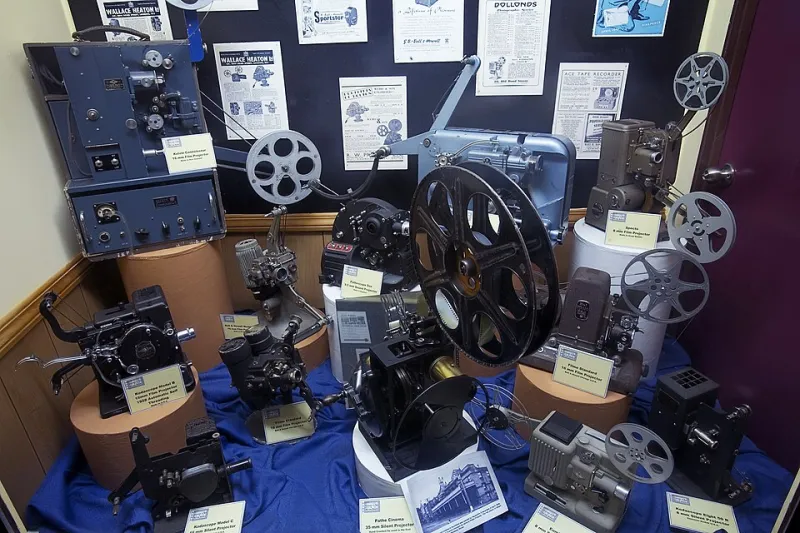
Photo: Jorge Royan, CC BY-SA 3.0, via Wikimedia Commons
You remember the exact frame.
Not the whole movie, necessarily. Maybe you've forgotten the plot, the character names, even roughly when you watched it. But that one moment — that specific arrangement of light and sound and human face — is still in there, crisp and undimmed, like it was burned directly onto the back of your skull the first time it hit you.
Every serious film-watcher has a handful of these. Scenes that arrived without warning and rewired something. The kind you don't talk about at parties because you're not sure you can explain why a three-second shot of someone's hands, or a line delivered too quietly, or a door closing on an empty hallway, did what it did to you. You just know it did. And you know you can never unsee it.
The Ambush of the Ordinary
What's strange about these moments is that they're rarely the ones the marketing team put in the trailer.
The big set pieces — the explosions, the confessions, the climactic confrontations — those you can see coming. You brace for them. Your emotional defenses go up a little, the way they do when you know something is designed to make you feel something.
But the moments that actually stay? They tend to sneak up through the ordinary. A character glancing out a window for a beat too long. The way an actor pauses before answering a question they weren't expecting. A background detail you weren't supposed to notice but did, and now you can't stop thinking about what it means.
These are the frames that get you precisely because you weren't braced. The story had your guard down, and then something slipped through.
Filmmakers who understand this — really understand it — know that the most devastating emotional information often lands in the negative space. In the cut away, not the confrontation. In the reaction shot, not the action. In the silence after the music stops.
Why Your Brain Files Certain Frames Differently
There's actual neuroscience here, though you don't need a degree to feel it working on you.
When an image or moment carries significant emotional charge — surprise, dread, grief, wonder — the brain tags it differently during storage. The amygdala, which handles emotional processing, essentially flags high-impact experiences and tells the memory system to hold onto them more tightly. This is why traumatic events and transcendent ones tend to be remembered with unusual vividness: your brain is prioritizing them, treating them like information you might need to survive.
A scene that hits you in an unexpected way activates this same system. Your brain can't fully distinguish between cinematic emotional impact and real emotional impact — which is part of why good storytelling works at all. So when a movie moment genuinely gets you, your memory treats it like something that actually happened to you. It files it accordingly.
And then it stays there. Intact. Occasionally surfacing without invitation.
The Curse of the First Watch
Here's the part that makes rewatching complicated: you can never get back to the first time.
The first viewing of a scene that genuinely floors you is unrepeatable. You were a specific person, in a specific emotional state, at a specific point in your life, and the scene arrived like it knew all of that. The next time you watch it, you're different. You know it's coming. You're watching yourself watch it rather than just watching it.
Some people find this comforting — the rewatch becomes a kind of controlled re-entry, a way to revisit something intense from a safer distance. Others avoid rewatching entirely because diluting the memory feels like a small loss they're not willing to accept. The scene is perfect in their head. The actual footage might not hold up, and they'd rather not find out.
There's a specific kind of cinematic moment — a look between two characters, a final shot that holds just long enough, a line reading so precisely calibrated it seems impossible that a real human being produced it on purpose — where rewatching almost feels like a violation. Like pressing too hard on a bruise to check if it's still there.
It's still there. It's always still there.
The Moments We Don't Talk About in Public
Ask someone what their favorite movie is and you'll get a considered answer, probably something they've said before. Ask them what movie moment they can never shake and you'll get a much longer pause.
Because these moments are personal in a way that favorite films aren't. They reveal something about your specific emotional architecture — what gets through your defenses, what resonates with something private and unresolved in you.
For some people, it's a scene of quiet domestic tenderness that hit during a period when their own home life was falling apart. For others, it's a death scene — not a dramatic one, but a small, almost bureaucratic one — that captured something true about loss that no eulogy ever managed. For others still, it's something stranger: a visual composition that triggered an emotion they couldn't name, or a piece of dialogue that seemed to be addressing them directly, as if the screenwriter had somehow read their mail.
These aren't just favorite scenes. They're evidence. Of who you were when you saw them, and what you were carrying.
Why Cinema's Smallest Moments Sometimes Carry Everything
A feature film runs roughly ninety minutes to two and a half hours. That's somewhere between 130,000 and 216,000 frames, depending on format. And yet, for most people, the film ultimately collapses into a handful of images — sometimes just one.
This is either a failure of memory or a testament to how much weight a single, precisely constructed moment can carry. The whole story funneling down into three seconds. Every character decision, every thematic thread, every emotional setup — all of it arriving at once in a glance or a gesture or a door swinging shut on nothing.
Good filmmakers seem to understand this intuitively. They build toward these moments the way a songwriter builds toward a single devastating lyric. Everything else is scaffolding. The frame is the thing.
And once you've seen it — really seen it, in that first unguarded moment when you didn't know it was coming — it belongs to you in a way nothing else quite does. Not the director's anymore. Not the actor's. Yours.
That's the strange gift cinema keeps giving, even when you didn't ask for it. Three seconds that rearrange something quietly, permanently, and without apology.
The frame burns in. The lights come up. You walk out a little different than you walked in.
You just don't always realize it until much later, when it surfaces again — uninvited, unchanged, still exactly as vivid as the first time it found you.